Commercial value in Lambton County does not live in a spreadsheet. It lives in the details of a Sarnia lease clause, a Point Edward parking ratio, a Petrolia storefront that has housed the same business for 30 years, and an industrial user in Chemical Valley that cares more about crane height and yard access than office finish. When a lender, buyer, court, or owner asks for a number, a seasoned commercial appraiser must choose the valuation path that best fits the property and the local evidence. Most of the time that choice comes down to the sales comparison approach or the income approach, and in this county, the right answer often depends on a few very local realities.
I will explain how each approach works in practice, where each shines or breaks down in Lambton County, and how to build a defensible opinion when market evidence is thin or noisy. This is not theory. These are the calls that shape real transactions and real risk.
The local lens: what an appraiser sees in Lambton County
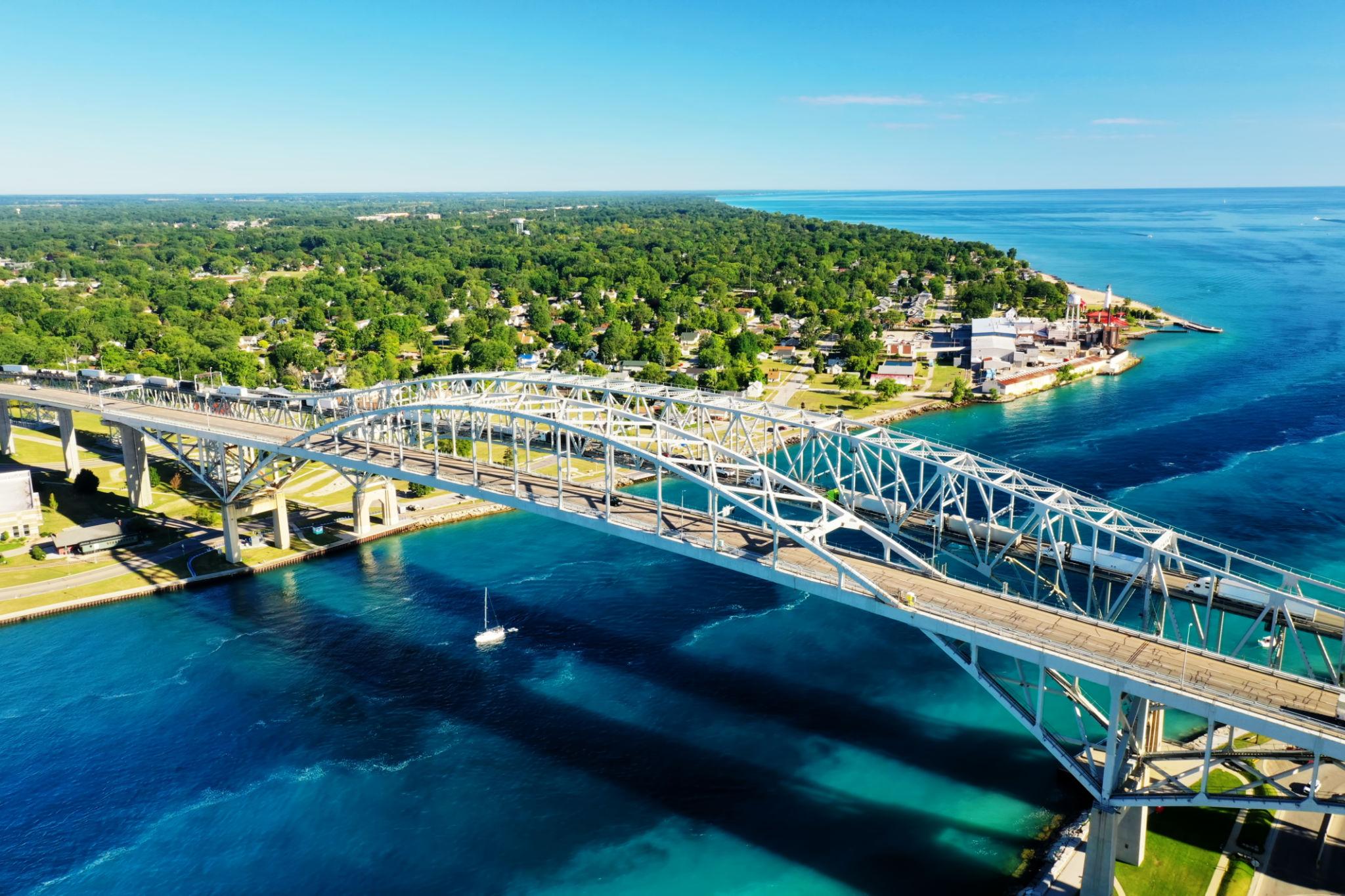
Lambton County is a patchwork of markets that behave differently. Sarnia and Point Edward pull weight as the urban and waterfront anchors, with Highway 402 and the Blue Water Bridge shaping logistics and visitor traffic. The petrochemical cluster in Sarnia drives steady industrial demand for certain specifications, while Lambton Shores, Petrolia, Wyoming, and Forest bring small town main streets and highway-oriented retail. This is not Toronto, where four similar sales from the last quarter sit on the appraiser’s desk. Here, a credible commercial property appraisal in Lambton County often requires a wider net, careful normalization, and more judgment.
A few practical markers I have seen affect value formation:
- Exposure to U.S. Traffic and cross-border trade raises the profile of some hospitality and logistics properties near the bridge. Older stock, particularly downtown office and legacy industrial, can face higher structural and environmental risk, which complicates both the sales comparison and income approaches. Leasing markets are relationship driven. A single local anchor can lift a strip centre’s stability even if the pro forma metrics look average. Data gaps are real. Sales disclosure is better than it used to be, but vendor take-back financing and portfolio bundling still blur price signals.
These patterns matter because each valuation approach leans on different data. The quality and comparability of that data is what makes one approach stronger than the other for a specific assignment.
The two workhorses, stripped to their essentials
Sales comparison translates what similar properties have sold for into an indication of what your property would fetch, after adjusting for differences in size, location, condition, timing, tenancy, and other attributes. It aims to observe the market directly.
Income capitalization converts a stream of cash flows into value, usually by normalizing net operating income and dividing it by a capitalization rate, or by projecting a multiyear cash flow and discounting it to present value. It aims to model the investor’s purchase decision.
Neither approach is inherently superior. The question is which one better captures buyer behavior for the property at hand, given the depth and quality of local evidence.
Local market realities that shape each approach
Sales comparison is only as good as the comparables. In Lambton County, relevant commercial sales are fewer, and they often come with wrinkles. A downtown Sarnia office sale might include furniture and equipment. A Petrolia retail sale may have a below-market family lease embedded. An industrial yard transaction could be part of a larger corporate deal that included goodwill. Each of those variables must be stripped out or adjusted. If you are missing the inputs to do that credibly, the result can look precise but feel flimsy.
The income approach lives and dies on achievable market rent, stabilized vacancy, and a defended cap rate. In Sarnia-Lambton, lease structures vary widely. Many small-bay industrial leases are gross or semi-gross, with informal recovery clauses. Retail net leases can pass through taxes and maintenance, but not always management or capital reserves. If you underestimate unrecoverable expenses or lease-up costs, your net operating income will be inflated. If you cherry-pick a cap rate from a larger market without calibrating for local risk and liquidity, the output will mislead you.
A professional commercial appraiser in Lambton County weighs these issues every time. On an assignment with strong, recent, arm’s-length comparables that require modest adjustments, sales comparison leads. If the market is thin but leases are transparent, occupancy is stable, and the property is investor oriented, the income approach often captures value formation more faithfully.
When the sales comparison approach carries the day
I think of the sales approach as a scalpel. It is sharp and efficient when handled with care, and it is dangerous if you force it through tissue that is not meant for it.
Cases where it typically serves you well in Lambton County:
- Small, owner-occupied retail or office buildings on or near main streets in Petrolia, Forest, Wyoming, and Sarnia’s Mitton Village or Northgate areas. Owner-users dominate demand, and buyers often value on a price per square foot basis more than on cap rate. Recent, multiple trades of similar buildings in the same submarket, such as a cluster of strip plazas along London Road or Exmouth Street with comparable exposure and age. Industrial condos or small-bay buildings where unit sizes, clear heights, and loading types align, and recent sales exist within a 30 to 60 minute radius that share cost structures and demand drivers.
Even then, I would never lift a price per square foot from a grid and call it a day. In Lambton County, I routinely adjust for:
Timing. In periods when interest rates shift quickly, a sale from 12 to 18 months ago may need a time adjustment. If prime rose 200 basis points over that window, cap rates likely expanded. The paired sales evidence will be imperfect, so I triangulate with lender spreads and broader Southwestern Ontario trends.
Condition and capital backlog. A building that needs a new roof or HVAC pack, at say 12 to 18 dollars per square foot in deferred items, should be adjusted at a discount greater than the raw cost. Buyers pad for risk and downtime.
Tenancy. Owner-occupied and short-term leased assets often trade at a discount to fully stabilized net lease properties because of the lease-up risk and downtime. I use occupancy spreads observed in small-market Ontario sales to guide these adjustments, typically 5 to 15 percent depending on covenant and term remaining.
Non-realty items. Equipment, inventory, or vendor take-back financing on sweet terms can distort price. I strip those out to isolate real property value.
The sales comparison approach answers the question a local buyer would ask: what did a similar building sell for down the road, corrected for the facts?
When the income approach is king
If the property is plainly an investment vehicle, the income approach usually leads. That includes multi-tenant retail plazas, office buildings with institutional leases, and most mid-size industrial properties leased to third parties. In Sarnia-Lambton, I pay close attention to four pieces.
Market rent vs. Contract rent. A five year old lease to a local retailer at 15 dollars per square foot net may be 2 to 5 dollars below what the market would sign today for similar exposure and condition. On appraisal, I stabilize to market rent at renewal unless the term and options indicate the existing rent will likely persist. For single-tenant properties with long, bond-like leases, I typically present both the contract and market rent scenarios and weigh them based on probability.
Vacancy and credit loss. County-wide vacancy averages hide submarket differences. In the last year or two, I have seen stabilized vacancy assumptions around 3 to 6 percent for well-located small-bay industrial, 5 to 8 percent for grocery-anchored or strong strip retail, and 10 to 15 percent for older, mid-tier office in downtown Sarnia. These are ranges, not promises. I align to the building’s actual leasing performance, quality, and competitive set.
Operating expenses and recoveries. In Lambton County, many leases recover taxes and maintenance but only partially cover management and admin. A defensible expense model will include property taxes, insurance, utilities for common areas, maintenance and repairs, management at 2 to 4 percent of effective gross income, and a reserve for replacement. I commonly see reserves set between 0.30 and 0.60 dollars per square foot per year for small to mid-size buildings, higher for older roofs and mechanicals. If leases are truly net and historicals show recoveries, I still test for leakage, bad debt, and nonrecoverable capital-like maintenance that has a habit of sneaking into the P&L.
Capitalization rate selection. Cap rate is not a number you lift from a national report and paste into Sarnia. Buyers in smaller markets price liquidity and tenant covenant risk differently. Over the past 12 to 18 months, I have observed stabilized cap rate indications in the following broad ranges for Lambton County and adjacent small markets: multi-tenant retail 6.5 to 8.0 percent, small to mid-bay industrial 6.25 to 7.75 percent, and general office 7.5 to 9.5 percent, with medical office and government tenancies pushing lower. A single-tenant, short-lease building with a purely local covenant will lean to the high side or even beyond these brackets. The band-of-investment method can be a useful cross-check, especially as debt terms shift.
When lease rolls are lumpy, options are off-market, or significant capital work is imminent, I move from direct capitalization to a five or ten year discounted cash flow. That model respects timing, downtime, leasing commissions, and tenant improvements, then exits at a terminal cap rate that reflects age and market risk at the end of the hold.
Two quick comparisons most clients ask for
- Sales comparison reflects what similar properties traded for, fast and intuitive. Income capitalization reflects what an investor would pay for the cash flow, detailed but assumption heavy. Sales works best when you have several local, recent, arm’s-length comparables. Income works best when leases are transparent, occupancy is stable, and investor buyers set the tone. Sales can miss embedded upside or downside in leases. Income can overfit a model to uncertain inputs. Sales is clean for owner-occupied and special small-town assets. Income is essential for net lease or multi-tenant properties. Both together improve credibility, especially when reconciled against highest and best use.
Selecting and adjusting comparables in a thin market
A strong sales comparison in Lambton County often relies on comparables from a broader geography. The art lies in controlling for what changes when you cross the county line. A strip plaza in Strathroy can be more comparable to one on London Road than a highway site in Lambton Shores, even though the latter is closer. I prioritize fundamental drivers: traffic counts, anchor draw, population density, and tenant mix. If I do use out-of-county sales, I apply a location adjustment grounded in observed pricing differences for similar property types between the two markets. This is where experience matters. I have seen 5 to 10 percent location adjustments justified for small retail between Sarnia and slightly larger nodes in Middlesex County, and wider spreads for offices due to demand depth.
Verification is non-negotiable. Assessment data, registry records, and brokerage flyers tell only part of the story. I call brokers, buyers, or sellers to confirm what was included in price, the lease status at sale, any unusual conditions, and whether a vendor take-back mortgage or package deal skewed the number. If I cannot verify, I weight the comp lightly.

I am also careful with unit rates. For industrial, price per square foot alone may hide yard value. A six acre yard with compacted surface can carry material contributory value, especially for logistics users serving Chemical Valley. I may bracket the building with a price per foot and then reconcile with a land-adjusted rate or a separate site value add-on.
Building a defensible income model
To keep the income approach honest, I ground each input in something one can check. Market rent comes from executed leases in the last 12 to 24 months for the same property type and quality, adjusted for inducements and tenant improvements. In Sarnia, recent deals for small-bay industrial have ranged roughly from 8 to 12 dollars per square foot net, depending on loading and clear height. Inline retail on strong corridors has found 14 to 22 dollars net for mid-size units, with outliers for end caps and pad sites. Professional office can sit between 10 and 18 dollars net depending on finish and parking. I avoid the temptation to stretch to support a target value.
For vacancy and credit loss, I start with the building’s trailing three years and then blend in submarket evidence. If a plaza has run at or near full occupancy for five years, a 5 percent stabilized assumption can be justified even if the city-wide retail vacancy reads higher. I still charge downtime for near-term rollover, and I respect the stickiness of local tenants with fair renewal options.
Expense normalization works best when you can lay two to three years of actuals side by side and scrub out one-offs. Snow removal https://blogfreely.net/geleynpmom/commercial-property-appraisal-in-lambton-county-cost-factors-explained in Lambton Shores in a heavy winter skews perception. I smooth these costs, then test my model against benchmarks from comparable buildings I have appraised or leased. Reserve for replacement should match the age and design. A flat roof nearing end of life demands a higher reserve than a sloped, newer membrane.
Finally, cap rates deserve triangulation. I look at local sales with verified income statements, regional sales with appropriate location adjustments, lender debt coverage requirements, and the spread between cap rates and achievable mortgage coupons. If lenders require a 1.30 debt service coverage ratio on a 25 year amortization, and five year fixed rates sit near 6 percent with a 65 percent loan to value, that math alone can constrain the value for highly leveraged buyers. A realistic cap must live in that ecosystem.
Edge cases that often trip people up
Single-tenant net lease properties. If the tenant is national and the term remaining is long, the market sometimes pays a price that reflects bond-like behavior, even in a smaller market. But if the tenant is local and the rent is above market, value often hinges on the re-leaseability of the box. I run both a contract rent valuation and a market rent re-lease scenario with downtime, then reconcile based on rollover risk.
Owner-occupied buildings. Many owner-users consider mortgage replacement cost, not investor yield. Here, the sales comparison approach dominates, but I still run a shadow income approach using market rent to make sure I am not overpaying for custom improvements that do not transfer to the next user.
Hotels and motels near the bridge. These trade on cash flow but often have management intensity and brand issues that make direct cap rates look misleading. A short DCF is more honest. I also consider seasonal patterns in occupancy due to cross-border dynamics.
Former gas stations and brownfields. Environmental risk can dwarf the usual valuation math. Lenders haircut heavily, and buyers price remediation uncertainty. Both sales and income approaches must respect the extraordinary assumptions, and the final reconciled value may carry higher than normal contingency.
Covered land plays. A low-rise retail or industrial building on an oversized site along a corridor slated for intensification can be worth more for its land than its current NOI justifies. Highest and best use drives, not the current rent roll. In these cases, I may bracket value with a land residual analysis or a land sales comparison, then show the supported premium over income value.
Cap rates and sentiment, late-2025 view
Interest rate volatility since 2022 reset expectations. In smaller markets like Lambton County, liquidity premiums widened. Buyers are choosier on tenant covenant and building quality. My field experience and verified sales suggest cap rates drifted 75 to 150 basis points higher from their 2021 troughs, with the widening most visible in secondary office and older industrial. Retail with daily needs anchors held up better, though pad sites with drive-thru tenants still command sharper yields. Keep in mind that cap rates are a shorthand for risk and growth, not a single number to memorize. I triangulate with rent growth assumptions, lease rollover timing, and capital need. A 7.25 percent cap on a stable, low-CAPEX industrial asset can pencil similarly to a 6.75 percent cap on a building with a roof and parking lot due within two years.
What lenders, courts, and assessors expect
Commercial appraisal services in Lambton County cover a spectrum of purposes: mortgage financing, litigation, expropriation, power of sale, tax assessment appeals, and corporate reporting. Each use case sets different evidentiary standards. Lenders prize stabilized, cash-flow centric valuations with conservative cap rates and robust sales support. Courts look for transparent reasoning and clear treatment of extraordinary assumptions. Assessment appeals hinge on mass appraisal corrections to reflect actual rents and occupancies. If you work with a commercial appraiser in Lambton County who explains why one approach deserves more weight than the other for your purpose, you are already ahead.
Two practical checklists clients find helpful
- Documents that speed up a commercial building appraisal in Lambton County: current rent roll with lease dates and options, trailing three years of income and expense statements, copies of major leases and any side letters, a capital expenditure summary with dates and costs, and any environmental or building condition reports. Market context to share early: recent leasing efforts and achieved rents, known upcoming vacancies or tenant renewals, any offers received in the past year, details of shared access, easements, or encroachments, and insights about anchor tenants or co-tenancy clauses that could trigger rent changes.
A tale of two assignments
A multi-tenant retail plaza on Exmouth Street. Built in the late 1990s, 25,000 square feet, grocery shadow anchor nearby, 95 percent occupied, mostly local service tenants on net leases, with base rents between 16 and 20 dollars per square foot. Recent sales of similar plazas in Sarnia and Strathroy verified at cap rates between 6.75 and 7.5 percent. The income approach produced a value centered on a 7.1 percent cap of stabilized NOI after a 5 percent vacancy factor and a 0.40 dollar per foot reserve. The sales comparison, adjusted for age and parking layout, bracketing between 230 and 255 dollars per square foot, pointed to a similar range. Here, the income approach led, with sales comparison as a sanity check.
An owner-occupied light industrial building near Confederation Line. Twenty thousand square feet with two dock doors and one grade door, clear height 20 feet, 3.5 acres with fenced yard. Few direct local sales existed in the last 12 months. I pulled three comparables from Chatham-Kent and Middlesex County with similar specs and adjusted 5 to 10 percent for location and 3 to 5 percent for time. The income approach, using market rents of 10 to 11 dollars net and a 6.75 to 7.5 percent cap, suggested a value, but the owner-occupier buyer pool was setting prices slightly higher per square foot than pure investors would. In reconciliation, I weighted the sales comparison more heavily. The final opinion reflected how that segment is actually trading.
Avoiding common data traps
I see three traps repeatedly in commercial property appraisal in Lambton County. First, using asking rents as market rents without netting for inducements. A headline rent of 18 dollars net might hide five months of free rent and a 12 dollar per square foot tenant improvement allowance. Annualize those concessions and you may be closer to 16.50 effective, before vacancy and reserves.
Second, ignoring expenses that tenants do not truly recover. Management fees, administrative overhead, and some elements of common area maintenance slip past recovery clauses in older leases. If one treats all leases as perfectly net, the NOI will look better than a buyer will believe.
Third, taking cap rates from bigger markets without a location and liquidity adjustment. A 6 percent cap for a similar plaza in Kitchener does not automatically port to Sarnia. Investor depth, perceived exit risk, and lease covenant differences matter. I prefer to show the math behind my cap, including debt terms, debt coverage constraints, and the spread to government bonds that buyers reference.
Highest and best use, quietly decisive
Before arguing about approaches, confirm that the current use is the legally permissible, physically possible, financially feasible, and maximally productive use. I have stood on sites along London Road where the underlying land value, supported by medium density permissions and developer interest, exceeded the capitalized value of the existing one story retail. When redevelopment is the highest and best use, both sales comparison and income approaches must pivot. Land sales, residual analyses, and scenario modeling lead. If you skip this, you risk valuing a future teardown as if it were a long-term hold.
Working with an appraiser who knows the county
A credible commercial real estate appraisal in Lambton County blends method with local truth. You want a practitioner who verifies sales, reads leases line by line, and is not afraid to expand the search radius when local data runs thin, while still adjusting honestly for market depth. You also want someone who can defend the chosen approach to a lender underwrite or on the witness stand. That requires judgment, not just formulas.
If you are vetting commercial appraisal services in Lambton County, ask for examples where the appraiser weighted sales over income, and vice versa, and why. Probe how they derive cap rates and whether they have verified local sales with income statements and financing details. Ask how they handle environmental issues, vendor take-back financing, and partial interests. The answers will tell you whether the report will stand up when it matters.
Bringing it together
In this county, there is no one-size formula. The sales comparison approach shines when the buyer pool looks like owner-users and when comparable trades are recent and verifiable. The income approach leads when cash flow and lease terms drive price, and when model inputs can be grounded in hard local evidence. The strongest commercial appraisals in Lambton County use both, reconcile them under highest and best use, and explain the why behind the weighting. When that happens, the number you get does more than fill a box on a form. It reflects how this market actually works.